

Everything You Need to Know About the Stop-Slow Bat in Australia
Stop Slow Bats Everything the public and new traffic controllers should know about using a stop slow bat on real roadwork sites in Australia.
Everything You Need to Know About the Stop-Slow Bat in Australia
If you have ever driven through roadworks and seen someone holding a red STOP sign on one side and an yellow SLOW sign on the other, you have seen a stop slow bat in action. The stop slow bat is one of the most recognised tools in traffic control across Australia. This article explains what a stop slow bat is, why it matters, how traffic controllers use it, and what the general public should understand about the role of a traffic controller. Whether you work in civil construction, are completing traffic controller training or you are just curious about how our roads stay safe, this guide breaks it down in simple, practical terms.
What is a stop slow bat and why is it so important?
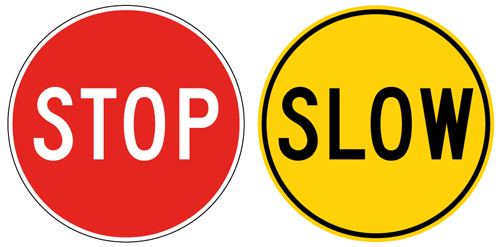
The stop slow bat, also called a stop/slow lollypop or stop slow paddle, is a handheld traffic control device used by trained traffic controllers to safely direct vehicles through temporary work zones. In Australia, it is a mandatory piece of equipment whenever traffic controllers are managing vehicle flow on live roads, detours or construction areas.
One side of the paddle displays STOP, which requires drivers to come to a complete halt. The other displays SLOW, which tells drivers they may proceed with caution. This simple tool becomes incredibly important on sites where heavy machinery, workers on foot and unpredictable traffic movements all mix. Without the stop slow bat, there is no controlled communication between road users and the worksite.
To answer the common question, “what is a stop slow bat?”, the simplest explanation is that it is the traffic controller’s main method of keeping everyone safe. It reduces confusion, slows drivers, and creates predictable gaps in traffic so work can continue without unnecessary risk.
How a traffic controller uses the stop slow bat on site
The role of a traffic controller is often misunderstood. Many people think it is just standing and spinning a sign, but the reality is much more involved. Traffic controllers are trained under nationally recognised units like RIIWHS205E and must hold a current traffic control licence in their state (for example, a traffic control licence NSW, QLD or VIC). Their job is to manage risk, coordinate traffic flows and communicate with crews on the ground.
Here is how a stop slow bat is practically used on a real Australian roadwork site:
- Judging safe gaps in traffic Traffic controllers watch approaching vehicles and choose safe times to stop or release traffic based on visibility, speed and road conditions.
- Coordinating with other controllers On two-lane closures, two controllers work together to ensure one direction moves at a time. Radios and hand signals keep the process tight and predictable.
- Protecting workers and the public The STOP side creates separation so workers can complete high-risk tasks. The SLOW side restores vehicle flow without compromising safety.
Good traffic controllers do not just wave a bat around. They read driver behaviour, weather, gradients, blind corners, sight distances and site hazards constantly. Their situational awareness is just as important as the equipment in their hands.
What this looks like on a real Australian site
Picture a suburban arterial road in Melbourne where a water authority is replacing a burst main. Excavators are digging into the road, trucks are backing in and out, and the crew needs a clear, safe window to work. Two traffic controllers are positioned at either end of the work zone.
One displays STOP while the other displays SLOW, allowing one direction of traffic to move at a time. They stay in contact on handheld radios, confirming when the lane is clear, when the next batch of cars can move and when workers are stepping into the live zone. A driver approaching on the SLOW side sees the paddle, reduces speed and passes the crew safely. On the other end, the STOP side holds back vehicles so the trench can be accessed without the risk of a car entering unexpectedly.
This setup might run for minutes or for hours depending on the job, but without the stop slow bat, none of it could be done safely.
The stop slow bat Australia uses and what equipment matters
Not all stop slow bats are created equal. Australian traffic management relies on equipment that is compliant, reflective and easy for controllers to handle for long periods. Modern paddles use durable aluminium discs, Class 1 reflective sheeting for high visibility and strong brackets that accept timber or aluminium poles.
Many contractors now prefer lightweight, sturdy models such as the ones supplied through UAG Services. UAG Services supplies compliant stop slow bats and extension handles that give controllers better reach and comfort during long shifts. These products are built for Australian sun, rain and worksite conditions, which is important because a controller may hold a bat for multiple hours without a break.
When contractors standardise their setups with UAG Services, they also tend to upgrade other safety equipment like racking cages, vehicle mounted arrow boards and temporary traffic control signs. This helps keep fleets consistent, easier to maintain and compliant with state requirements.
How to choose the right stop slow bat and supporting gear
Choosing the correct equipment is part of running a safe and professional traffic control setup. Here is what to look for:
- Class 1 reflective sheeting Ensures the STOP and SLOW messages remain visible from long distances, even at night.
- Lightweight aluminium discs Reduce fatigue for the controller, especially on long shifts.
- Durable handle and bracket A strong bracket keeps the bat stable and reduces wrist strain.
- Extension handles Useful when the controller needs extra reach, especially near barriers or heavy plant. UAG’s extension handle options are purpose built for these situations.
- Quality supporting signage A stop slow bat is only one part of a compliant setup, so warning signs, advance warnings, cones and arrow boards must match.
For crews wanting a complete, reliable setup, UAG Services can supply both the handheld equipment and the vehicle fit outs to support it. Many contractors use UAG to standardise their racking cages and storage so bats, poles and signs are always organised and easy to reach.
Summary and practical takeaways
- The stop slow bat is a simple but critical tool for controlling live traffic safely.
- Traffic controllers are trained professionals who rely on skill, judgement and proper equipment.
- Using compliant stop slow bats and consistent setups, such as those supplied by UAG Services, makes worksites safer and more efficient.
Stay safe out there!