

Temporary Traffic Management Corflute Signs: 2026 Guide
Author: Traffic Management Specialist, UAG Services Date Posted: 4 May 2026
Temporary Traffic Management corflute signs are lightweight, weather-resistant signs made from corrugated plastic. They are used to guide and inform road users during roadworks, events, or temporary situations, offering clear, high-visibility instructions
TL;DR: Temporary traffic management corflute signs are lightweight reflective sign panels used to warn, instruct and guide road users through short-term roadworks, civil works and changed traffic conditions. They work best when installed in the correct frame, placed in the right sequence and kept clean, flat and readable throughout the shift.
What are temporary traffic management corflute signs?
Temporary traffic management corflute signs are 6mm lightweight sign panels used in short-term traffic control setups. They carry roadwork, speed, warning, detour, pedestrian and lane control messages that guide road users through changing worksite conditions.
Unlike permanent aluminium signs, corflute panels are built for temporary deployment, quick handling and repeated transport between sites. They are commonly used by traffic control companies, civil contractors, councils and utility crews where sign messages may need to change as the job progresses.
Where are corflute signs used on site?
Corflute signs are used throughout temporary traffic management layouts, including advance warning areas, approaches to work zones, lane closures, detours, pedestrian paths and active work areas.
A typical traffic control sequence may include advance warning signs first, followed by speed control, instruction signs and directional guidance closer to the work area. The goal is to give motorists, pedestrians or cyclists enough time to understand the change before reaching the hazard or decision point.
Why are corflute signs common in temporary traffic control?
Corflute signs are common because they are light, fast to deploy and easy to replace when damaged. For short-duration work, reactive maintenance and mobile crews, this makes them practical compared with heavier sign materials.
Crews can carry a large range of legends in a vehicle racking cage, then select the required panels for the traffic management plan. This is useful for works where the setup changes during the day, such as utility repairs, shoulder works, lane closures, footpath closures or detour changes.
How should corflute signs be mounted?
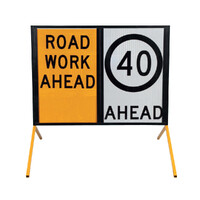
Corflute signs should be mounted in a frame or support system that holds the panel upright, flat and readable to approaching road users. Multi-message sign frames are commonly used because they allow several related messages to be displayed in one organised setup.
A loose, bowed or poorly supported panel can reduce readability, especially at night when reflective performance depends on the sign face being positioned correctly toward approaching headlights. Signs should also be checked during the shift for dirt, damage, movement or wind exposure.
What makes a corflute sign suitable for temporary traffic management?
A good temporary traffic management corflute sign needs the right legend, correct size, suitable reflective sheeting and practical frame compatibility. The sign must match the message required by the traffic management plan and be placed where road users can act on it in time.
For UAGS corflute traffic signs, common construction includes 6mm corflute and Class 1W full-cube prismatic retroreflective sheeting, depending on the specific sign. Product requirements can vary by sign type, road authority requirements and the traffic management layout being used.
What mistakes should crews avoid?
The most common mistakes are using the wrong message, placing signs out of sequence, using damaged panels, mounting signs too low or failing to keep the sign face clean and flat.
These issues can make the sign harder to read and can reduce the effectiveness of the overall traffic control setup. A sign should not just be present on site, it needs to be positioned, supported and maintained correctly so the message is clear at the point where road users need it.
Corflute signs vs aluminium signs, which should you use?
Corflute signs are best used for temporary works where speed, flexibility and transportability matter. Aluminium signs are more appropriate where a sign needs to stay in place for longer periods or where greater durability is required.
| Corflute Signs | Short-term works, fast setup, lightweight handling and temporary traffic control use. |
| Aluminium Signs | Longer-term use, higher durability and more permanent installations. |
Practical example: utility works on a suburban road
A utility crew repairing a service fault on a suburban road may need a short-term lane closure and pedestrian diversion. The crew selects the required corflute panels from the vehicle, installs them into multi-message frames and positions them in sequence before the work area.
If the work zone changes, panels can be swapped or repositioned without replacing the whole setup. This is where corflute signage is most useful, short-term control, quick adjustment and clear staged messaging.
How to choose the right corflute sign setup
Start with the traffic management plan, then select the signs, frames and supports that match the required layout. The right setup depends on the road user being managed, the hazard or instruction being communicated and where the sign sits in the sequence.
For many temporary traffic control setups, a practical system includes corflute sign panels, multi-message sign frames, frame legs, cones, bollards and vehicle-mounted warning equipment. Keeping the same frame and sign format across vehicles also helps crews work faster and reduces confusion during setup.
View UAGS corflute traffic control signs
FAQ
What are corflute traffic management signs?
Corflute traffic management signs are lightweight temporary sign panels used to warn, direct or instruct road users through short-term roadworks and changed traffic conditions.
Are corflute signs used for permanent road signs?
No. Corflute signs are generally used for temporary traffic management. Longer-term or permanent sign installations usually require more durable materials such as aluminium.
What frame is used with corflute traffic signs?
Many temporary traffic control corflute signs are used with multi-message sign frames, allowing several related sign panels to be displayed together in a staged message.
When should damaged corflute signs be replaced?
Damaged, faded, dirty or creased corflute signs should be replaced when the message is no longer clear, flat or readable to approaching road users.
Do corflute signs need reflective sheeting?
Reflective sheeting is commonly used for temporary traffic control signs so the message remains readable in low-light and night-time conditions. The required reflective type depends on the sign and project requirements.
Conclusion
Temporary traffic management corflute signs are a practical part of modern roadwork and civil site setups, but they only work properly when used in the right sequence, mounted correctly and maintained during the shift.
For crews that rely on fast setup and clear messaging, standardising corflute signs, frames and vehicle storage can make each job cleaner, faster and easier to manage.
Author Bio
UAGS supplies traffic control equipment, vehicle warning systems, communications gear and vehicle fitout solutions for traffic control companies, civil contractors, councils and fleet operators across Australia. Our content is based on practical product use, real vehicle setups and traffic management equipment experience.